Kneeling positions are part of many yoga sequences, stretching routines, mobility exercises, and floor-based workouts. While some people can comfortably place their knees directly on a standard mat, others experience uncomfortable pressure against the floor.
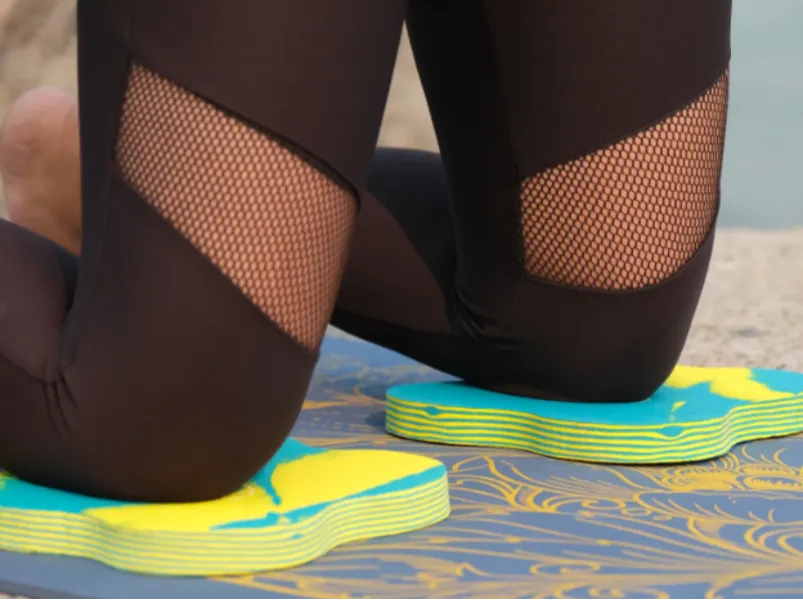
A Wiselife Yoga Knee Pad provides additional cushioning at specific contact points without requiring the practitioner to replace the main yoga mat.
For yoga practitioners around Vasant Vihar, Thane, understanding when a knee pad is useful can help determine whether this compact prop belongs in a regular practice setup.
Why Kneeling Can Feel Uncomfortable
The knee has relatively little natural cushioning at the front. When body weight is placed directly onto a firm surface, pressure can become noticeable.
The experience can depend on several factors, including:
- The hardness of the floor
- Yoga mat thickness
- Duration of the kneeling position
- Individual sensitivity
- Frequency of floor-based practice
- The amount of pressure placed on the knee
This does not mean that simply adding as much cushioning as possible is always appropriate. Excessively soft support can sometimes make positioning feel unstable.
Targeted Cushioning Has a Practical Advantage
A knee pad differs from using an unusually thick mat across the entire practice area.
Instead of changing the surface under the hands and feet throughout a sequence, targeted padding can be positioned only where additional comfort is wanted. This can help practitioners maintain the familiar feel of their main mat while adding cushioning for selected movements.
That makes the accessory useful for people who generally like their existing mat but want extra support during kneeling exercises.
Knee Pads Can Have Uses Beyond the Knees
Depending on the design and exercise, compact cushioning may also be useful beneath other pressure-sensitive contact points.
For example, some practitioners may position additional padding beneath the elbows during certain floor exercises. Others may use it during stretching, mobility work, or home fitness sessions where direct contact with a hard floor becomes uncomfortable.
The prop should still be positioned carefully so it does not interfere with stability.
Check Size Thickness and Surface Grip
When assessing a Wiselife Yoga Knee Pad, look beyond softness.
The dimensions should provide enough usable space without becoming cumbersome. The surface should feel suitable for the intended movements, and the underside should sit securely on the main practice surface.
A pad that moves unexpectedly can become distracting. It is therefore useful to test how the accessory interacts with the yoga mat and flooring.
Keep Alignment in Mind
A cushioning accessory is intended to improve comfort, not compensate for unsuitable technique.
Practitioners should continue paying attention to positioning and alignment during kneeling poses. Yoga teachers can provide modifications when a particular posture remains uncomfortable despite appropriate cushioning.
Persistent or unexplained knee pain should not simply be masked by adding more padding.
A Small Prop Can Solve a Specific Practice Problem
Yoga accessories are most valuable when they have a clear purpose. Someone who rarely performs kneeling movements may have little need for additional knee cushioning. A practitioner who regularly finds hard-floor contact distracting may use it frequently.
People in Vasant Vihar exploring yoga props can consider their existing mat, typical practice style, and personal comfort preferences before purchasing. Eldorado One Stop Yoga Store carries yoga and home fitness accessories for different practice requirements.
The useful question is not whether every practitioner needs a knee pad. It is whether targeted cushioning makes your own sessions more comfortable without compromising stable movement.
Keywords