Once yoga becomes a regular routine, practitioners often start noticing details they barely considered when purchasing their first mat. Does the mat move on smooth flooring? Does it provide enough stability in standing poses? Is the cushioning appropriate for floor work? Does the material suit personal preferences?
These questions often lead shoppers to explore Natural Rubber Yoga mats.
For practitioners around Saket Road, Thane, evaluating natural rubber mats across several practical factors can help determine whether this material fits their home, studio, or fitness routine.
Floor Grip Is an Important Consideration
A yoga mat needs to interact with two surfaces at once.
The upper surface interacts with the practitioner, while the bottom interacts with the floor. If the base shifts excessively on smooth flooring, practice can become distracting.
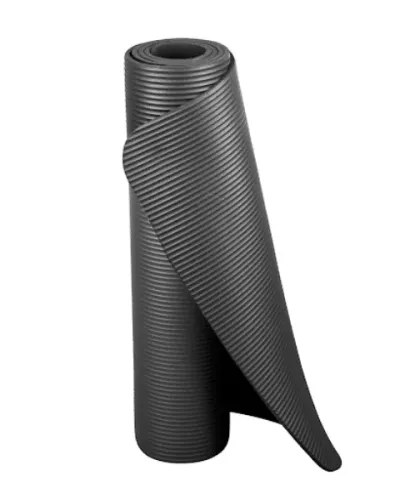
Natural rubber is frequently used in yoga mat construction where manufacturers want to create a substantial, grounded base. Actual performance still depends on the complete product design, surface construction, thickness, and flooring.
This makes checking the individual mat more useful than relying solely on the material name.
Density Can Affect the Practice Experience
A mat does not have to be extremely thick to provide meaningful cushioning.
Density influences how the material compresses under body weight. Some practitioners prefer a dense surface because it provides cushioning without creating an excessively soft feeling beneath standing poses.
Others may prefer lighter materials because they transport their mats frequently.
Before purchasing, think about whether the mat will mostly remain at home, travel to classes, or move between multiple teaching locations.
Weight Can Be an Advantage and a Tradeoff
A more substantial mat may feel stable during home practice but can be less convenient to carry regularly.
This tradeoff matters for yoga instructors and practitioners who commute to classes.
Someone practising primarily at home around Saket Road may place less importance on carrying weight and more importance on stability. Someone travelling daily with a mat may evaluate the same product differently.
Material Sensitivity Should Not Be Ignored
Natural rubber contains latex proteins, so individuals with known latex sensitivity or allergy should carefully check product materials and consider whether a rubber-based mat is suitable for them.
This is one reason product labels and material specifications deserve attention.
The term natural does not automatically mean that a product is appropriate for every individual.
Compare Practical Ownership Factors
Before selecting Natural Rubber Yoga mats, evaluate the complete ownership experience:
- Grip on your usual flooring
- Upper-surface traction
- Thickness and density
- Mat dimensions
- Overall weight
- Cleaning guidance
- Storage requirements
- Material composition
- Frequency of practice
People living in humid conditions should also pay attention to appropriate drying and storage practices rather than leaving a damp mat rolled for extended periods.
Buy According to Use Rather Than Material Trends
Material trends can make one type of mat appear universally suitable, but yoga equipment is personal.
Eldorado One Stop Yoga Store serves practitioners, instructors, fitness enthusiasts, studios, and other yoga buyers across Thane with different mat and accessory requirements.
For a practitioner who values a substantial mat and suitable floor stability, natural rubber can be an option worth evaluating. For someone prioritizing very low carrying weight, other constructions may deserve consideration.
The better buying decision comes from matching the mat’s complete characteristics to the environment and frequency in which it will actually be used.
Keywords