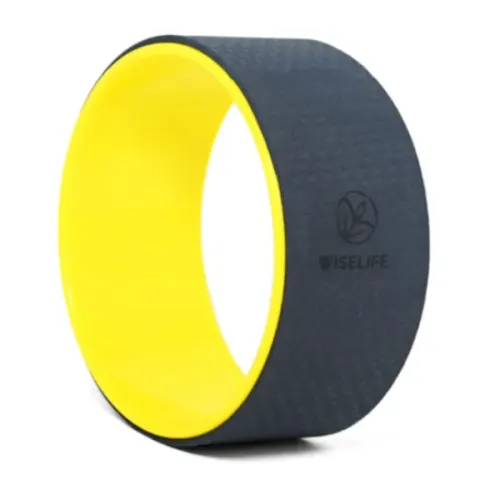
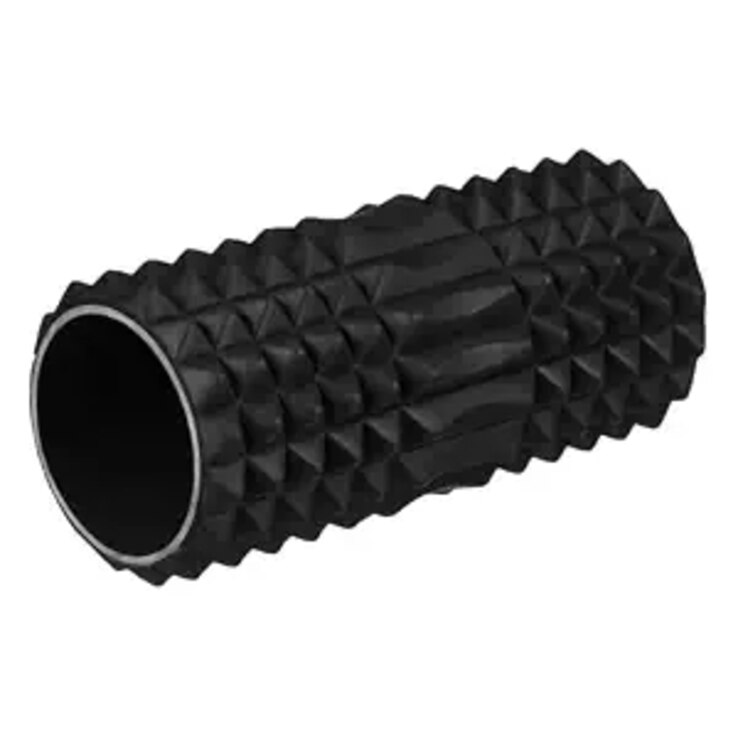
A spike foam roller can feel markedly more intense than a smooth roller, which makes technique and dose important after yoga, lifting or cardio. You will learn where to place it, how much pressure to use, when to stop, and how to choose it against other self-massage tools without mistaking short-term relief for tissue repair.
Key takeaways
- Use slow passes and stop before pain becomes sharp or electric.
- Start with body weight partly supported, then increase pressure gradually.
- Choose a smooth roller for broad pressure and a ball for small areas.
- Rolling can ease short-term soreness and stiffness, not repair tissue damage.
What a spike foam roller changes compared with a smooth roller
A spike foam roller changes the contact pattern: its raised knobs touch smaller areas, creating concentrated pressure instead of the broad, even load of a smooth roller. That sharper stimulus can make a tight or tender spot feel more noticeable, but it does not prove that the roller reaches deeper fascia or removes adhesions.
| Feature | Spike foam roller | Smooth foam roller |
|---|---|---|
| Contact | Smaller contact points and stronger local sensation | Broader, more even pressure |
| Best fit | Targeted work when you tolerate firmer pressure | Large muscle groups, beginners and frequent shared use |
| Expected effect | Short-term soreness modulation and movement tolerance | Similar recovery purpose with a gentler feel |
Texture alone does not establish better recovery, flexibility or performance. Research has not shown a spiked roller to outperform a smooth roller; the useful difference is how easily you can control pressure and find a tolerable sensation.
Rolling can produce a short-term range of motion increase without the performance drop associated with prolonged static stretching. Treat that change as temporary mobility support, not permanent flexibility or faster muscle regeneration.
A brief, comfortable session may help you move with less stiffness after yoga or training, while forcing the roller into painful tissue can increase irritation rather than improve recovery.
How to roll after yoga, strength training or cardio
Use the roller for 5 to 10 minutes after yoga, strength training or cardio, with 30 to 60 seconds on each muscle area. Slow, controlled passes support short-term muscle recovery without turning soreness into another workout.
1. Wait until your breathing settles, then choose the muscles that did the most work. After yoga, that might mean the calves, hamstrings and glutes after repetitive loading or long holds. Do not use the roller to force extra range at a joint already held at end range.
2. Place the roller under one muscle area and support your weight with your hands. Begin with light pressure and roll through a short section at a steady pace; avoid fast, repeated scrubbing.
3. After strength training or cardio, start with the calves, hamstrings, glutes or outer thighs rather than pressing directly into a tender spot. Spend 30 to 60 seconds per area, then move on instead of repeatedly compressing one muscle.
4. Keep the roller on muscle tissue. Do not roll over the spine, front of the neck, joints, kneecaps, bruises, open skin or a suspected strain.
5. Stop when the sensation becomes sharp, electric, burning or radiating. Reduce your weight through your hands if pressure feels too strong; useful rolling should not leave worsening pain.
Rolling does not replace fluids, food, sleep or injury care. Skip high-pressure use and seek clinical guidance after recent surgery or with osteoporosis, a bleeding disorder, significant varicose veins or unexplained severe pain.
How to control pressure and recognise a warning signal
Start with the minimum body weight that creates a mild, broad ache: keep most of your weight on your hands, forearms or opposite leg. Increase pressure in small steps, never by dropping onto the spikes. Slow passes over 30–60 seconds give you better pressure control than fast, forceful rolling.
Useful pressure feels like tolerable tenderness in the muscle and eases as you pause or reduce your weight. Harmful pain feels sharp, electric, burning or radiating, or causes numbness, tingling, weakness or bruising. Stop immediately if those signals appear; do not try to “roll through” them.
Avoid these areas:
- The spine, front of neck, lower back and joints
- Bony prominences such as the kneecap, ankle bones and hip points
- Bruises, open skin, acute strains or areas that could involve a fracture
- Any region with unexplained severe pain
| Sensation during rolling | What it means | Your response |
|---|---|---|
| Mild muscular tenderness that stays local | The pressure is probably tolerable | Continue slowly, or reduce weight if it intensifies |
| Sharp pain, burning, electric or radiating pain | Possible nerve or tissue irritation | Stop and avoid that area |
| Numbness, tingling, weakness or visible swelling | A warning signal, not productive soreness | Stop and seek medical advice if it persists |
Ask a clinician before using concentrated pressure if you have osteoporosis, a bleeding disorder, significant varicose veins or recent surgery. Use clinical guidance for severe pain with no clear cause.
Which recovery tool fits the muscle and the user
Choose the tool by target area, tolerance, portability and pressure. A spike roller suits someone who wants a concentrated stimulus across muscle tissue and can control body weight; it is a poor default for beginners, tender muscles or a shared class where one intensity must suit many bodies.
| Option | Best fit | Better or worse choice |
|---|---|---|
| Spike roller | Calves, hamstrings, glutes and other broad muscle areas needing focused pressure | Stronger local stimulus, but less forgiving and harder to standardise for different users |
| Smooth foam roller | Beginners, large muscle groups and frequent group use | Distributes load evenly, making instruction and pressure control easier |
| Massage stick | Quads, calves and users who want adjustable pressure without lying on the floor | Portable and precise, but tiring for large areas and difficult to use on your back |
| Massage ball | Small, stubborn areas such as the glute muscles or the sole of the foot | Precise and compact, but too intense or narrow for broad muscle coverage |
For shared equipment, choose a smooth foam roller as the baseline, then add a spike roller for experienced users who want more intensity. A massage stick gives each person better control, while a massage ball needs clearer guidance because users can press too hard against one small spot.
Eldorado One Stop Yoga Store’s plain roller and Muscle Roller Stick are useful comparison points when a facility is deciding whether coverage or portability matters more. Avoid high-pressure tools until a clinician clears them if you have osteoporosis, a bleeding disorder, recent surgery or unexplained severe pain.
Related products
 | Home Fitness ₹1408 ECO-FRIENDLY MATERIAL & COMPACT SIZE: Crafted from high-quality EVA foam, this foam roller is eco-friendly, lightweight, and durable, offering a... View product → |
 | Home Fitness Foam Roller Plain - Black Green ₹1408 • Eldorado - Wiselife Foam Roller is made from high-quality eco-friendly EVA foam, offering a lightweight, durable, and travel-friendly design for... View product → |
What rolling can realistically contribute to recovery
Rolling is best treated as a short-term comfort and mobility tool, not a repair treatment. After exercise, it may reduce perceived soreness over the next 24 to 72 hours, but the average benefit is modest and does not prove faster muscle regeneration.
Use it as part of a simple routine:
- Before training, spend 30 to 60 seconds on a tight area, then complete your dynamic warm-up. Rolling is a warm-up adjunct, not a substitute for raising body temperature.
- After training, roll slowly for 30 to 60 seconds per muscle area, then use gentle stretching if it feels comfortable. Do not pair aggressive rolling with deep stretching at an already end-range joint.
- Across the day, prioritise fluids, adequate carbohydrate and protein intake, sleep and load management. These habits support recovery; a roller cannot compensate for too little food, poor sleep or a sudden increase in training.
Disregard claims that ordinary self-rolling breaks up scar tissue, flushes lactic acid or permanently releases fascia. It may briefly improve movement tolerance and range of motion without the performance loss linked with prolonged static stretching, but that change is temporary.
Stop if pressure produces sharp, radiating or injury-like pain rather than familiar muscle tenderness. Persistent pain, swelling, weakness or worsening symptoms calls for assessment instead of more rolling.
Frequently asked questions
What does a spike foam roller change compared with a smooth roller?
Raised knobs contact smaller areas, creating more concentrated pressure than a smooth roller’s broad, even load. The sharper sensation does not prove deeper fascia access or adhesion removal.
How should you roll after yoga, strength training, or cardio?
Use slow, controlled passes over the target muscle and avoid rolling directly over joints, the spine, or an acute injury. Begin with reduced body weight and increase pressure only if the sensation stays tolerable.
How can you control pressure while rolling?
Shift more weight through your hands, knees, or the supporting leg to reduce pressure. Stop when pain becomes sharp, electric, numb, or causes unusual weakness.
Which recovery tool fits different muscles and users?
A smooth roller suits broad muscle areas and sensitive users, a spike roller provides more concentrated contact, and a massage ball targets small areas. Choose the tool that lets you control pressure without provoking warning symptoms.