Yoga blocks are sometimes viewed as beginner equipment, but that description misses much of their value. Practitioners at different experience levels use blocks to modify poses, explore alignment, create additional height, and add support during restorative work.
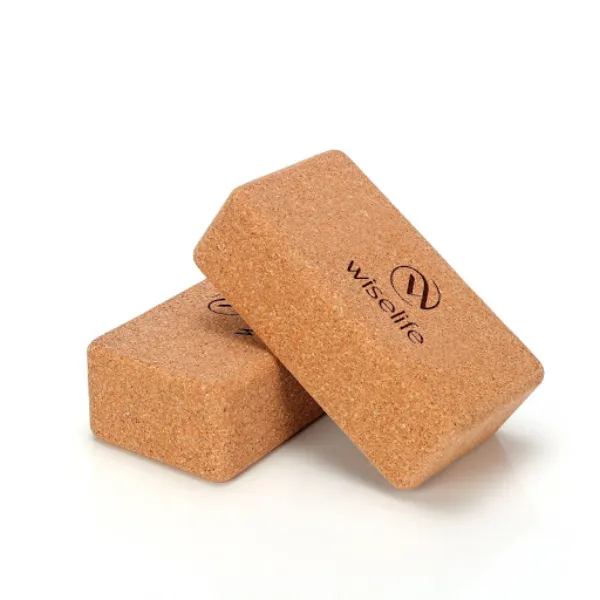
Cork Yoga blocks are particularly appealing to people who prefer a firm, substantial prop.
For practitioners around Nitin Company, Thane, understanding how cork blocks differ from softer alternatives can make product selection easier.
Firmness Changes How a Block Feels
Foam blocks generally compress more under body weight. Cork typically feels firmer and denser.
That firmness can be useful when a block is being used as a stable base beneath the hands. Some practitioners appreciate the more solid sensation when working on standing poses and balance-focused movements.
Others may prefer softer foam during restorative poses where the body rests against the block for longer periods.
Neither option is automatically better. The intended use matters.
Blocks Can Reduce Unnecessary Reaching
Suppose a practitioner cannot comfortably reach the floor during a standing forward fold or triangle-style pose. Attempting to force the hand downward may compromise alignment elsewhere.
A block provides additional height.
Depending on the pose, it can be positioned at different orientations to create varying levels of support. This allows the practitioner to work within a manageable range while maintaining greater control.
Cork Can Suit Stability Focused Sessions
Because cork blocks tend to feel substantial, they can work well when stability is the priority.
Common applications include:
- Standing pose modifications
- Supported lunges
- Seated posture adjustments
- Balance exercises
- Chest-opening variations
- Certain restorative setups
Correct positioning remains important. Props should support practice rather than force the body into a predetermined shape.
Size Is Worth Checking
Not every yoga block has identical dimensions.
Before purchasing, compare height, width, and depth. People with larger hands may prefer a wider surface, while users prioritising portability may want something more compact.
Studios purchasing multiple blocks also need to consider storage and repeated handling.
Consider the Full Practice Environment
If you regularly transport equipment between home and a studio, the additional density of cork compared with some foam products may influence your choice.
For a dedicated home yoga area, weight may be less significant.
Across Thane and Maharashtra, both home practitioners and yoga professionals increasingly use props to make sessions adaptable to different mobility levels. Eldorado One Stop Yoga Store provides yoga accessories that can support these varied practice requirements.
Cork blocks are worth considering when firmness and stability are priorities. Rather than choosing them simply because cork is popular, evaluate how you plan to use the block, how much cushioning you prefer, and whether you need to transport it regularly.
A thoughtfully selected prop can make poses more accessible while allowing technique and flexibility to develop progressively.
Keywords